
There are times when a physical exam alone does not provide enough information to fully understand what is happening inside your dog’s body. Diagnostic imaging allows veterinarians to look beyond what can be seen externally and evaluate internal structures more clearly. Tools such as X-rays (radiographs), ultrasound, CT scans, and MRI each provide different types of detail, helping your pet's doctor make an accurate diagnosis and plan treatment.
During a routine wellness exam, your veterinarian evaluates your dog’s overall health by checking weight, examining their eyes and teeth, and listening to their heart and lungs. While these steps are essential, they offer only part of the picture. When concerns involve internal organs, bones, or soft tissues, additional imaging may be recommended to better understand the cause of your dog’s symptoms.
For example, if your dog is vomiting and may have swallowed a foreign object (we know how much dogs love socks!), an X-ray can help determine whether something is lodged in the digestive tract. If your dog is experiencing pain or difficulty walking after an injury, advanced imaging such as an MRI may be used to evaluate for conditions like a herniated disc or other spinal issues. In these situations, diagnostic imaging plays an important role in identifying the problem and guiding the next steps in care.
Let’s look at each of the four types of medical imaging and when they’re used.
When Might My Dog Need Diagnostic Imaging?
Your veterinarian may recommend diagnostic imaging when a physical exam or initial testing does not provide enough information. Common reasons for recommending additional testing and imaging in dogs include:
- Persistent vomiting or diarrhea
- Difficulty breathing or coughing
- Limping, pain, or difficulty walking
- Suspected ingestion of a foreign object
- Abdominal swelling or discomfort
- Unexplained weight loss or changes in appetite
- Seizures or other neurologic symptoms
- Evaluation of a mass or abnormal growth
- Follow-up monitoring of a known condition
If you notice any unusual changes in your pet's behavior, appetite, or appearance, it is crucial to contact your veterinarian as soon as possible. Acting quickly can help uncover underlying health issues at an early stage, allowing for more effective treatment and better outcomes for your pet. Remember, your veterinarian is your best resource for ensuring your pet's well-being.
The Four Types of Diagnostic Imaging
What dog diagnostic tests all have in common is that they all show internal “pictures” of different parts of your dog’s anatomy, which help your veterinarian make a more informed diagnosis of your dog’s health.
All diagnostic imaging tests are designed to give your veterinarian a clearer view of your dog’s internal structures. Each tool provides different types of information, which helps guide a more accurate diagnosis and treatment plan.
X-Rays (Radiographs)
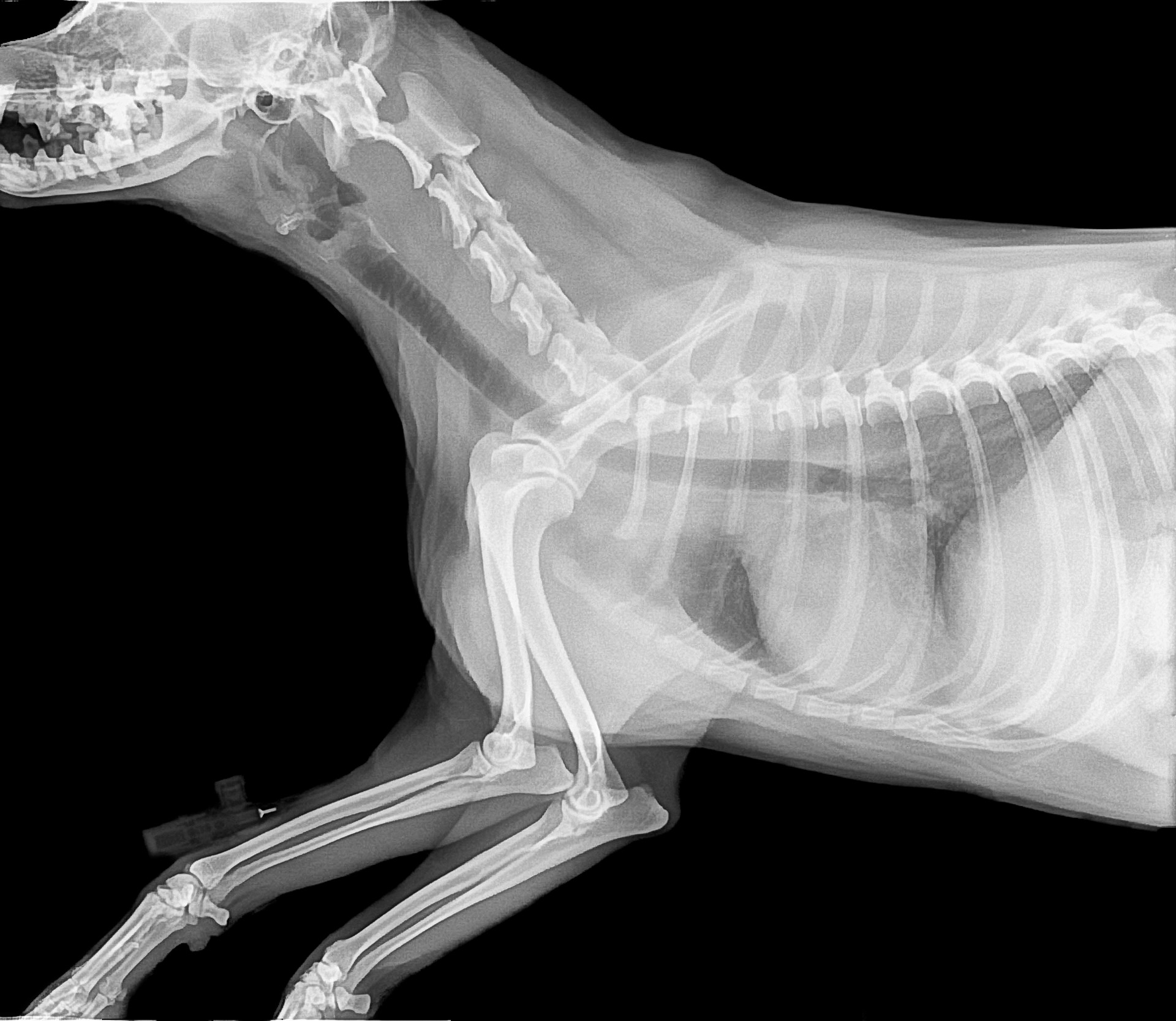
X-rays are one of the most commonly used imaging tools in veterinary medicine. They are especially helpful for evaluating bones and identifying issues such as fractures, arthritis, or foreign objects in the stomach or intestines. X-rays can also provide a general overview of the chest and abdomen.
During the procedure, your dog is carefully positioned so the area of concern can be imaged. The level of radiation used is low and considered safe. In some cases, mild sedation may be recommended to reduce stress and ensure clear, accurate images.
Ultrasound
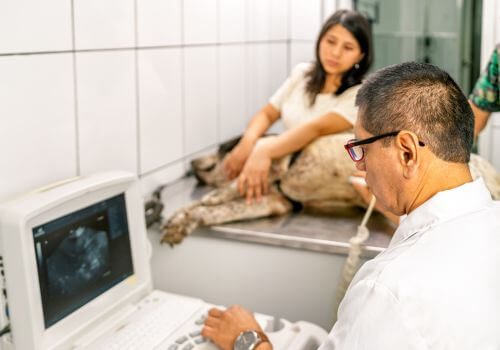
Ultrasound is often used alongside X-rays to evaluate soft tissues and internal organs in greater detail. It is commonly recommended when assessing the heart, liver, kidneys, bladder, or other abdominal structures. Unlike X-rays, ultrasound provides real-time images, allowing your veterinarian to evaluate how organs are functioning.
A small probe is placed against your dog’s skin, and sound waves are used to create images on a monitor. This tool is especially useful for identifying fluid buildup, masses, or changes in organ structure that may not be visible on X-rays.
MRI (Magnetic Resonance Imaging)
MRI is an advanced imaging technique used to evaluate the brain, spinal cord, and other soft tissues. It is often recommended for dogs with neurologic symptoms, such as difficulty walking, weakness, or seizures. MRI provides highly detailed images that can help diagnose conditions like herniated discs, inflammation, or cancer">tumors in dogs.
Because the scan requires complete stillness, dogs are placed under anesthesia during the procedure to ensure their comfort and safety.
CT Scans (Computed Tomography)
CT scans use a series of X-ray images to create detailed cross-sectional views of the body. They are particularly helpful for evaluating complex areas such as the chest, nasal passages, or joints. CT imaging can provide more detail than standard X-rays and is often used for surgical planning or to further investigate abnormalities.
Like MRI, CT scans typically require sedation or anesthesia to keep your dog still during the scan.
Together, these imaging tools allow your veterinary team to better understand what is happening inside your dog’s body and develop a treatment plan tailored to their specific needs.
Is Diagnostic Imaging Safe for My Dog?
Yes, diagnostic imaging is considered safe and routinely used in veterinary medicine to provide a clearer picture of your pet's health and what they might need. It's all about making sure your veterinarian can provide the best care possible. Most imaging techniques are non-invasive and well-tolerated by dogs. X-rays use a low level of radiation, and ultrasound relies on sound waves, making both very safe options when used appropriately.
For advanced imaging such as MRI or CT scans, sedation or anesthesia is typically required so your dog can remain still. Your veterinarian will evaluate your dog’s overall health beforehand and discuss any risks, as well as the steps taken to keep your dog comfortable and safe throughout the procedure.
Trusting Your Veterinarian’s Recommendation
If your veterinarian recommends diagnostic imaging, it is because they need more information to accurately understand what is happening with your dog’s health. While some conditions can be diagnosed through a physical exam alone, many require a closer look at internal structures to reach a clear and complete diagnosis.
Your veterinary team will consider your dog’s symptoms, medical history, and overall health before recommending any imaging. Their goal is always to choose the most appropriate and least invasive option to get the answers needed to guide care.
If you have questions about why a specific test is being recommended, your veterinarian will be happy to walk you through the reasoning and what the results may help uncover. Open communication can help you feel confident in the plan and ensure your dog receives the most appropriate care.
If you have questions, we would love to answer them for you. Please give us a call at the office at (540) 894-4572, or you can email us at [email protected]. Our staff would love to talk with you!
Don't forget to follow us on social media Facebook, Instagram.